KLM British Airways Flight Cancellations: What’s Really Going On?
 Musannaf seo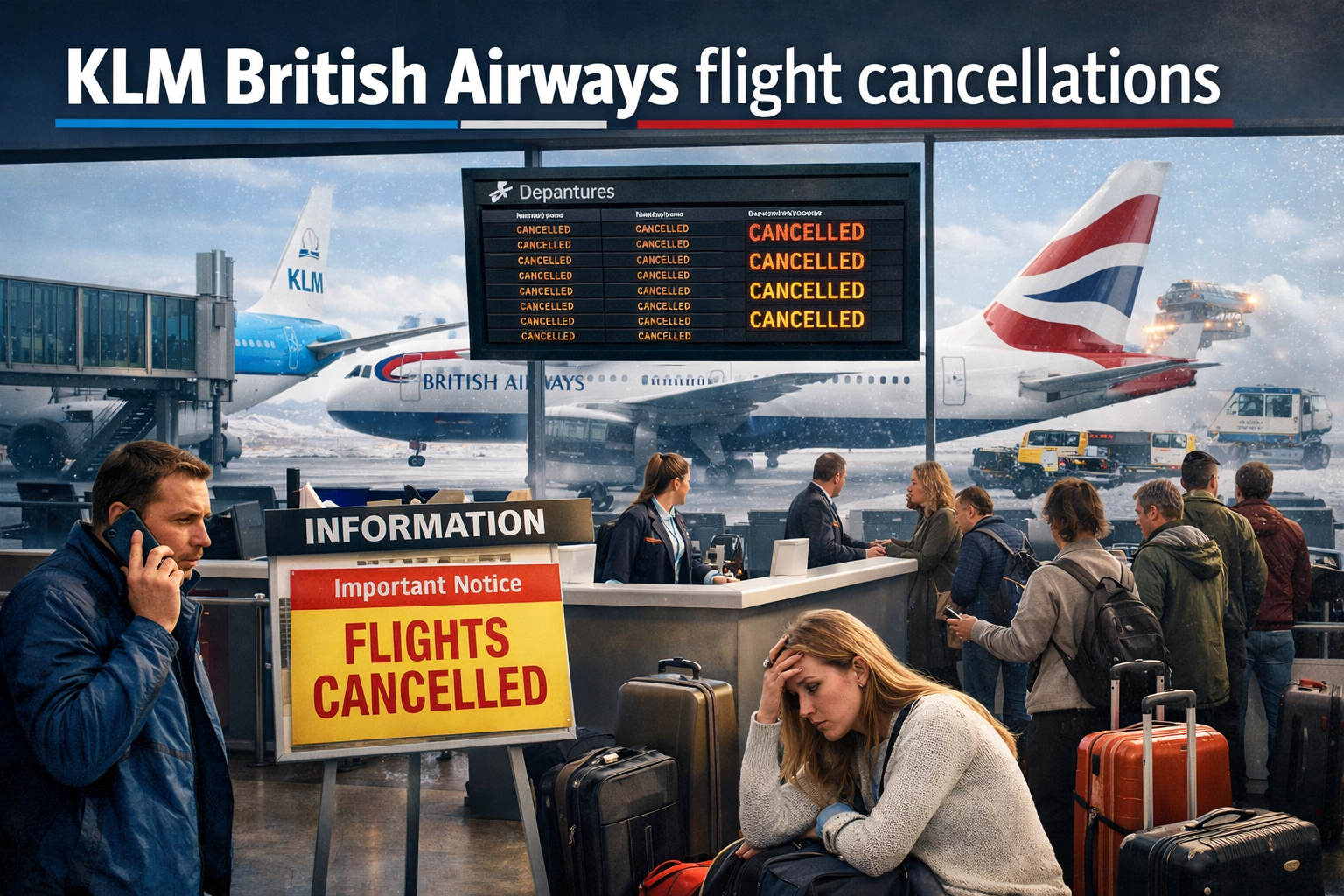
KLM British Airways flight cancellations cause delays and travel disruption across European airports.
KLM British Airways flight cancellations have disrupted travel plans for thousands of passengers across Europe and beyond. From Amsterdam Schiphol to London Heathrow, travelers have faced sudden cancellations, long delays, missed connections, and growing frustration. While flight disruptions are not unusual during peak travel seasons, the scale and frequency of recent cancellations involving KLM and British Airways have raised serious concerns.
Unlike isolated incidents, these cancellations reflect a combination of severe weather, operational challenges, airport congestion, and airline resource shortages. For passengers, the bigger issue isn’t just why flights are being canceled, but what happens next—refunds, rebooking, compensation, and accommodation.
This article breaks down everything you need to know about KLM British Airways flight cancellations, using real-world data, airline policies, and passenger rights to give you a clear, reliable picture.
Why Are KLM Flights Being Cancelled?
Severe Weather Conditions Across Europe
One of the primary reasons behind recent KLM flight cancellations has been severe winter weather across Europe. Heavy snowfall, freezing temperatures, and poor visibility have forced airports to slow operations or shut down runways entirely. Amsterdam Schiphol, KLM’s main hub, has been particularly affected during snowstorms.
Weather disruptions don’t just delay departures. They create a domino effect, grounding aircraft in the wrong cities and leaving crews out of position. Once schedules collapse, airlines are often forced to cancel flights rather than operate them hours—or even days—late.
De-Icing Fluid Shortages at Schiphol
A less common but highly impactful issue has been shortages of de-icing fluid at major airports. During periods of sustained freezing weather, aircraft must be de-iced before takeoff to ensure safety. When demand exceeds supply, airports cannot process planes fast enough.
At Schiphol Airport, this shortage significantly slowed operations. KLM confirmed that some flights were canceled simply because planes could not be cleared for safe departure within allowable time windows. This operational bottleneck became one of the most talked-about causes of KLM flight cancellations.
Air Traffic Control and Capacity Constraints
European airspace is among the busiest in the world. When weather reduces capacity or staff shortages hit air traffic control centers, airlines are instructed to cut flights. These cuts are mandatory, not optional.
In such cases, KLM must choose which routes to cancel based on aircraft availability, crew hours, and passenger volumes. Unfortunately, this often results in last-minute cancellations that catch travelers off guard.
British Airways Flight Cancellations: What’s Causing the Disruptions?
Weather Impact at UK Airports
British Airways has faced similar challenges, particularly at London Heathrow and Gatwick. Snow, fog, and high winds regularly reduce runway capacity, forcing airlines to operate fewer flights than scheduled.
Because Heathrow operates near maximum capacity even on good days, any disruption quickly escalates. British Airways, as the airport’s largest carrier, often bears the brunt of these reductions.
Staffing and Operational Challenges
Beyond weather, British Airways has continued to deal with staffing constraints. Like many airlines, BA reduced its workforce during the pandemic and later struggled to rebuild experienced crews. When staff shortages collide with operational disruptions, cancellations become unavoidable.
In some cases, flights were canceled not because of aircraft issues, but due to insufficient cabin crew or pilots available within legal duty limits.
Aircraft and Maintenance Scheduling Issues
Modern aircraft require tight maintenance schedules. When delays push planes off rotation, required checks can force them out of service. British Airways has acknowledged that disrupted aircraft rotations have contributed to recent flight cancellations.
How Many Flights Have Been Cancelled or Delayed?
Exact numbers change daily, but during peak disruption periods, hundreds of flights across Europe have been canceled or delayed. On the worst days:
- Dozens of KLM flights were canceled at Amsterdam Schiphol
- British Airways canceled and delayed flights across Heathrow, Gatwick, and regional UK airports
- Thousands of passengers experienced missed connections and overnight delays
These figures highlight that KLM British Airways flight cancellations are not isolated events but part of wider European aviation strain.
Airports Most Affected by Flight Cancellations
Amsterdam Schiphol Airport
Schiphol remains the epicenter of KLM flight disruptions. As a major European hub, any slowdown has continent-wide consequences. Snow, de-icing delays, and staffing limitations have repeatedly forced KLM to cancel short-haul and long-haul flights.
Passengers connecting through Schiphol have been particularly vulnerable, as missed inbound flights often cause onward journeys to be canceled entirely.
London Heathrow and Gatwick
British Airways’ main hubs have faced chronic congestion. Weather-related capacity cuts at Heathrow often force airlines to pre-emptively cancel flights to avoid chaos later in the day.
Gatwick, while less congested, has fewer backup options when operations slow, making recovery harder once delays begin.
Other European Airports
Paris Charles de Gaulle, Frankfurt, and Milan have also seen ripple effects. Flights canceled at one hub often lead to aircraft shortages at another, expanding the disruption footprint.
What Passengers Are Experiencing on the Ground
For travelers, KLM British Airways flight cancellations mean more than statistics. Many passengers have reported spending hours in airport queues, struggling to reach customer service, or being rebooked days later.
Families traveling with children, business travelers with tight schedules, and international passengers unfamiliar with local rules have been especially affected. Social media has filled with accounts of missed weddings, delayed holidays, and unexpected hotel stays.
These stories underline why understanding passenger rights is essential.
Passenger Rights Under EU261 and UK Law
Your Right to a Refund or Rebooking
When KLM or British Airways cancels a flight, passengers are entitled to choose between a full refund or rebooking on the next available flight. Rebooking may include flights on partner airlines if necessary.
Airlines must offer this choice; they cannot force vouchers unless the passenger agrees.
Right to Care: Meals, Hotels, and Transport
If you are stranded due to flight cancellations, airlines must provide basic care. This includes meals, refreshments, hotel accommodation when overnight stays are required, and transport between the airport and hotel.
This obligation applies regardless of the cause of cancellation.
Compensation: When You May Be Eligible
Under EU261 (and UK-retained versions of the law), passengers may be entitled to compensation ranging from approximately €250 to €600, depending on flight distance.
However, compensation depends on the reason for cancellation and how much notice was given.
When Compensation Does NOT Apply
Extraordinary Circumstances Explained
If KLM British Airways flight cancellations occur due to extraordinary circumstances, airlines are not required to pay compensation. These circumstances include:
- Severe weather
- Air traffic control restrictions
- Airport closures
- Security risks
In such cases, airlines must still provide care and rebooking, but not cash compensation.
Gray Areas Passengers Should Know
Operational issues linked indirectly to weather—such as crew shortages caused by earlier disruptions—can fall into legal gray zones. Some passengers successfully claim compensation by arguing that airlines failed to manage disruptions properly.
Step-by-Step Guide: What to Do If Your Flight Is Cancelled
First, confirm the cancellation through official airline channels. Avoid relying solely on airport announcements. Next, choose between refund or rebooking immediately, as seats fill quickly during disruptions.
Keep all receipts for meals, transport, and hotels. If the airline does not provide assistance, you can claim reasonable expenses later. Document everything, including screenshots and boarding passes.
Finally, submit a compensation claim if applicable. If the airline rejects it, third-party claim services or national enforcement bodies can help.
Official Policies From KLM and British Airways
KLM and British Airways both publish travel alerts and disruption policies on their official websites. These pages provide the most up-to-date guidance on rebooking options, refunds, and customer support availability.
Passengers should always check these sources before making independent arrangements.
Tips to Reduce the Impact of Flight Cancellations
Travel early in the day when possible, as earlier flights are less likely to be canceled. Avoid tight connections during winter months, especially through major hubs.
Travel insurance that covers delays and cancellations can provide extra protection. Keeping flexible plans and monitoring flights proactively can also reduce stress.
Will KLM British Airways Flight Cancellations Continue?
While weather-related disruptions may ease seasonally, structural challenges remain. Airport capacity limits, staffing constraints, and increasing passenger demand mean cancellations will likely continue during peak periods.
Airlines are working to stabilize operations, but travelers should prepare for ongoing volatility, especially during winter and summer travel peaks.
Final Thoughts
KLM British Airways flight cancellations reflect deeper challenges within European aviation. While safety must always come first, better communication and clearer passenger support remain essential.
For travelers, knowledge is power. Understanding why cancellations happen, what rights you have, and how to respond can turn a stressful situation into a manageable one. As long as air travel demand continues to rise, staying informed will remain the smartest travel strategy.
About the Author


 Musanaf seo