Scooter Braun: The Rise, Reign, and Reinvention of Music’s Most Controversial Mogul
 Musanaf seo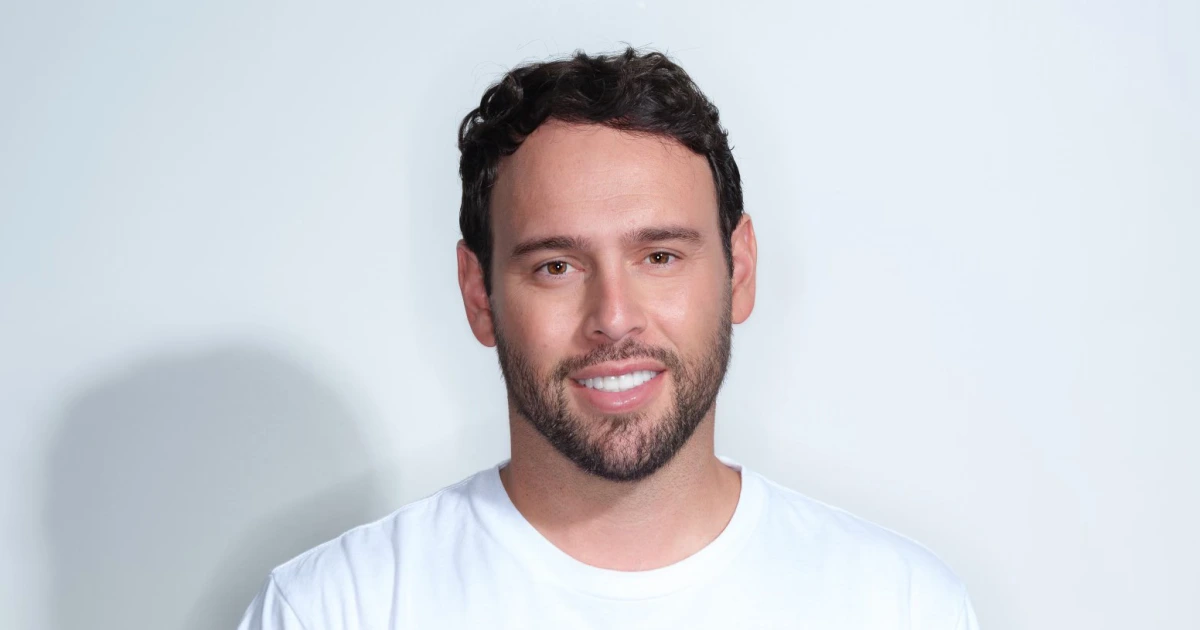
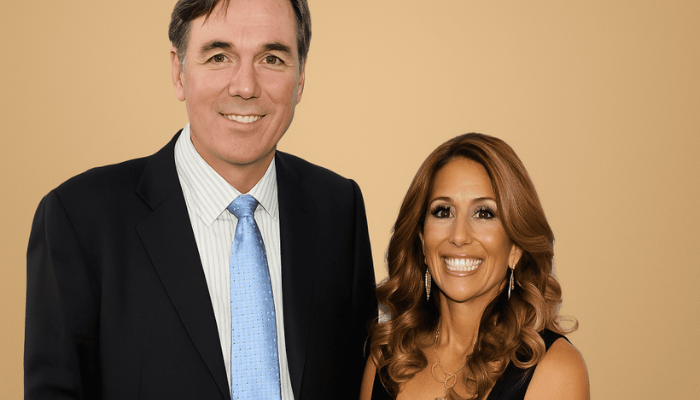
scooter braun at a music industry event showcasing his influence as one of entertainment's most powerful executives
When a 26-year-old talent manager discovered a 13-year-old Canadian kid singing on YouTube, nobody predicted it would reshape the entire music industry. Yet that’s exactly what happened when Scooter Braun stumbled across Justin Bieber in 2008. Fast forward to 2025, and Braun’s journey reads like a masterclass in ambition, controversy, and calculated risk-taking.
Scott Samuel “Scooter” Braun was born June 18, 1981, in New York City to Conservative Jewish parents. His father Ervin emigrated from Hungary in 1956, eventually becoming a dentist and basketball coach. His mother Susan worked as an orthodontist. The family settled in Cos Cob, Connecticut, where young Scooter developed both athletic prowess and entrepreneurial instincts.
From Party Promoter to Power Player
Braun’s entry into entertainment wasn’t through traditional channels. While attending Emory University in Atlanta, he started organizing parties that caught industry attention. His breakthrough came in 2002 when he landed the gig planning after-parties for the Anger Management Tour featuring Ludacris and Eminem.
This connection led to meeting Jermaine Dupri, founder of So So Def Records, who offered Braun a position as executive director of marketing. The young promoter quickly made waves, organizing high-profile events including parties for the 2003 NBA All-Star Game and after-parties for Britney Spears’ 2004 Onyx Hotel Tour.
But Braun wasn’t content staying in someone else’s shadow. He left So So Def in 2005 and immediately demonstrated his negotiating chops by brokering a $12 million campaign deal between Ludacris and Pontiac. That move signaled something important: this wasn’t just another industry employee. This was someone who understood both talent and business.
The YouTube Discovery That Changed Everything
The story of how Scooter Braun found Justin Bieber has become music industry legend. In 2008, while searching for another artist on YouTube, Braun accidentally clicked on a video of a young Canadian boy covering Ne-Yo’s “So Sick.” Something about the kid’s raw talent stopped him cold.
Braun tracked down Bieber’s mother, Pattie Mallette, in Stratford, Ontario. After considerable persuasion—she was initially skeptical of the music industry—Braun convinced her to bring Justin to Atlanta. He co-founded Raymond Braun Media Group (RBMG) with R&B star Usher, and signed the teenager to what would become SB Projects.
Bieber’s debut album My World 2.0 catapulted both artist and manager to global prominence. Braun produced Never Say Never, a documentary about Bieber that became one of the highest-grossing music documentaries in domestic box-office history. The film’s $13 million budget earned over $100 million worldwide.
Building an Empire: SB Projects and Beyond
Success with Bieber opened doors to an impressive roster. Braun’s management company SB Projects signed Ariana Grande in 2013, Demi Lovato in 2019, and worked with artists including Kanye West, J Balvin, Ozuna, Dan + Shay, and The Kid Laroi. Each signing reinforced Braun’s reputation for spotting potential and converting it into commercial success.
Beyond management, Braun diversified aggressively. He founded Schoolboy Records, co-founded investment firm TQ Ventures, and established Mythos Studios with Marvel Studios’ founding chairman David Maisel. His investment portfolio reads like a tech industry who’s-who: Uber, Spotify, Dropbox, Pinterest, and Waze.
The entertainment executive also produced for film and television. He executive-produced the CBS drama Scorpion (2014-2018) and the FX comedy Dave, which became FX’s most-watched comedy show in its first season.
The Taylor Swift Controversy That Defined a Decade
No discussion of Scooter Braun’s career escapes the Taylor Swift saga. In June 2019, Braun’s Ithaca Holdings acquired Big Machine Records for approximately $300-$350 million. The deal included the master recordings of Swift’s first six albums.
Swift’s response was immediate and explosive. In a Tumblr post that sent shockwaves through the industry, she called Braun’s behavior “incessant, manipulative bullying” and described the acquisition as her “worst case scenario.” She claimed she’d been trying to buy her masters for years but was denied the opportunity.
The controversy deepened when Swift alleged Braun later prevented her from performing her old songs. She also pointed to his past association with Kanye West—who’d released the controversial track “Famous” with sexual references to Swift while working with Braun—as evidence of ongoing harassment.
Braun’s clients rallied to his defense. Justin Bieber posted an apology for past insensitive behavior but insisted Braun “didn’t have anything to do with it.” Demi Lovato defended Braun, stating, “I have dealt with bad people in the industry and Scooter is not one of them.”
However, Swift weaponized her massive fanbase effectively. She announced plans to re-record her first six albums, aiming to devalue the original masters. The strategy proved devastatingly successful. iHeartRadio, America’s largest radio network, announced it would only play “Taylor’s Version” songs, replacing older recordings as new versions released.
In 2020, Braun sold the disputed masters to Shamrock Holdings for approximately $405 million, netting a reported $265 million profit. But the damage to his reputation was done. In May 2025, Swift finally acquired rights to her first six albums, marking what journalists called “a watershed for musicians’ rights and ownership of art.”
The feud became the subject of a 2024 HBO Max documentary, Taylor Swift vs. Scooter Braun: Bad Blood. When Braun finally watched it, he told the Bloomberg Screentime event, “It’s five years later. I think, everyone, it’s time to move on. There were a lot of things that were misrepresented.”
The HYBE Deal and Industry Transformation
April 2021 brought Braun’s most significant business move. South Korean entertainment giant HYBE announced it would acquire Ithaca Holdings for approximately $1.05 billion. Braun became CEO of HYBE America and joined the company’s board of directors.
The deal showcased Braun’s loyalty to his team. Long-time staffers received $50 million in stock from Braun’s personal allotment. Justin Bieber and Ariana Grande each received $10 million.
Under Braun’s leadership, HYBE America acquired Quality Control Music for $300 million in 2023. In 2025, he partnered HYBE America with Jermaine Dupri’s So So Def to launch new music and cooperate on distribution and marketing—a full-circle moment connecting back to his earliest industry mentor.
The Client Exodus and Retirement
2023 brought troubling headlines. Reports emerged that major clients were departing SB Projects. J Balvin left in May, followed by Demi Lovato and Ariana Grande. Rumors swirled that even Justin Bieber was seeking new management, though representatives denied these claims.
In June 2024, Braun officially announced his retirement from artist management after 23 years. In a lengthy Instagram statement, he reflected on his journey and explained his decision:
“I was really just 19 years old when I started. So for my entire adult life I played the role of an artist manager on call 24 hours a day, 7 days a week,” he wrote. “But as my children got older, and my personal life took some hits, I came to the realization that my kids were three superstars I wasn’t willing to lose.”
Scooter Braun shares sons Levi and Jagger, plus daughter Hart, with ex-wife Yael Cohen Braun. The couple filed for divorce in July 2021, which was finalized in September 2022. They agreed to joint custody with Braun providing monthly child support.
The retirement marked the end of an era but not Braun’s industry involvement. He continues as board member and senior advisor at HYBE, focusing on broader business strategy rather than day-to-day artist management.
The Question Everyone Asks: Is Scooter Braun a Billionaire?
Scooter Braun’s net worth generates significant speculation. Celebrity Net Worth estimates his fortune at approximately $500 million to $1 billion as of 2025. The variance stems from different methodologies for calculating his HYBE stock holdings, real estate portfolio, and technology investments.
The HYBE acquisition alone provided substantial wealth. Braun reportedly received $86-100 million in cash and stock. Add profits from the Big Machine deal ($265 million), early technology investments that have appreciated dramatically, and decades of management commissions, and the total becomes substantial.
His real estate portfolio reflects this wealth. In 2021, Braun purchased a $65 million mansion in Brentwood, Los Angeles. He also owns a $36 million villa in Montecito, previously owned by Ellen DeGeneres, plus properties in Austin, Texas.
Philanthropy and Public Image
Despite controversies, Braun maintains significant charitable involvement. He co-founded the Braun Family Foundation and assists his brother Adam’s charity, Pencils of Promise. As of 2017, Braun and his clients had granted more wishes for the Make-A-Wish Foundation than any other organization in the foundation’s history.
He received the Humanitarian Award at the 2016 Billboard Touring Awards for supporting Pencils of Promise, Make-A-Wish, and cancer research. In 2017, Braun organized “Hand in Hand,” a telethon raising $55 million for Hurricane Harvey and Hurricane Irma relief efforts.
Braun also coordinated the charity single “Stuck with U” by Justin Bieber and Ariana Grande, benefiting the First Responders Children’s Foundation. He played significant roles in organizing March for Our Lives and worked with George Clooney on fundraising efforts.
Legacy and Lessons
Scooter Braun’s career offers compelling lessons about modern entertainment. He demonstrated how social media could revolutionize talent discovery years before it became standard practice. His aggressive diversification into technology investments protected him from relying solely on music industry income.
However, his story also illustrates reputation’s fragility. The Taylor Swift controversy—regardless of legal merits—fundamentally altered public perception. It sparked industry-wide discussions about artists’ rights, master ownership, and power dynamics between managers and talent.
The subsequent client exodus suggested deeper issues beyond the Swift situation. When multiple major artists depart simultaneously, it signals systemic problems rather than isolated incidents.
Yet Braun’s transformation from artist manager to corporate executive demonstrates adaptability. By positioning himself at HYBE’s helm, he’s influencing global entertainment trends, particularly the integration of K-pop and Western markets.
What’s Next for the Music Mogul?
As of early 2025, Scooter Braun focuses on expanding HYBE’s global footprint. His role involves strategic partnerships, acquisitions, and identifying emerging markets. The So So Def collaboration suggests he’s leveraging long-term industry relationships for mutual benefit.
He’s also investing in artificial intelligence companies including OpenAI, Scale AI, and Nvidia, positioning himself at technology’s cutting edge. This mirrors his earlier success with Uber and Spotify—identifying transformative companies before mainstream recognition.
When asked at the Bloomberg Screentime event which artist he’d build a company around today, Braun named Taylor Swift. “I think the artist that you should always bet on, and is already a huge star, and you can always bet on because they want it all the time…is Taylor Swift,” he said, acknowledging her relentless work ethic despite their bitter history.
The Final Verdict
Love him or despise him, Scooter Braun fundamentally shaped 21st-century music. He proved YouTube could launch superstars, demonstrated social media’s power in artist development, and showed how diversification protects against industry volatility.
His mistakes—particularly the handling of the Taylor Swift situation—provide cautionary tales about communication, transparency, and respecting artists’ emotional connections to their work. The legal right to acquire masters doesn’t necessarily equal the moral right, especially when acquisition feels like punishment.
As he enters this next chapter focused on global strategy rather than individual careers, Braun’s influence continues. The kid who promoted parties in Atlanta became one of entertainment’s most powerful figures. Whether history judges him as visionary or villain likely depends on which story you believe—and that ambiguity might be the most fitting legacy for someone who’s always operated in shades of gray rather than black and white.
The question isn’t whether Scooter Braun mattered to music history. Clearly, he did. The question is what his reinvention teaches us about power, accountability, and redemption in an industry that rarely forgives but always remembers.
About the Author